


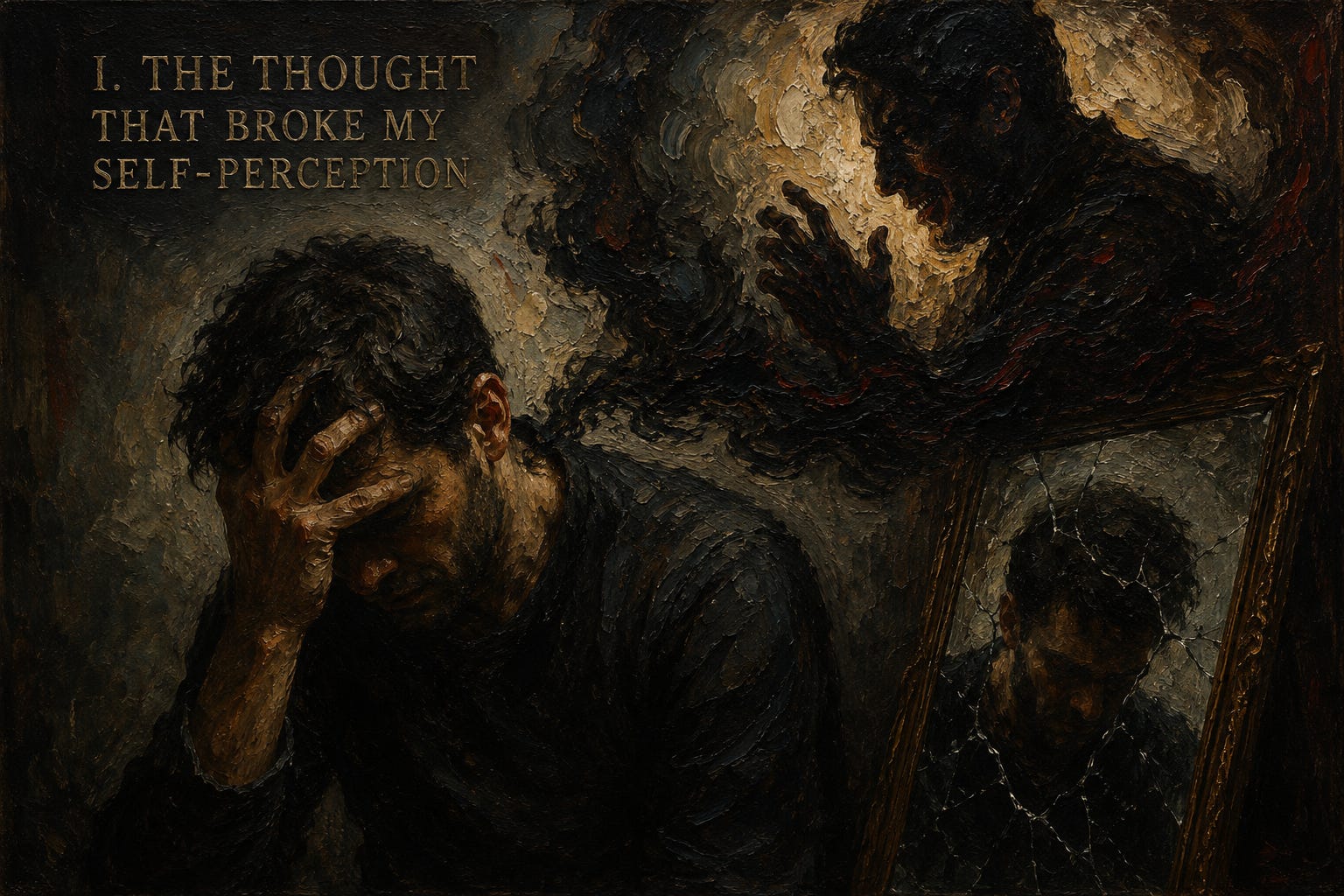
I. The Thought That Broke My Self-Perception
This is not a normal talk today. This is something real I have struggled with over the last two years of my life. I want to be clear on the title of this post. I am not talking about a clinical issue here. I am talking about a mental and spiritual one.
There is a song I heard by Stephen Stanley that helped me begin overcoming this. It is called No Hopeless Soul. The very first line grabbed me immediately:
“Do you feel paralyzed by the things you try to hide that take place inside your mind and won’t let you go?”
That line explained something I had been carrying but could not properly articulate. Some of the heaviest wars a person will ever fight are completely invisible to everyone around them. People can see you laughing, working, joking, and functioning while internally your thoughts are dragging you through concrete.
For me, it started with a thought I had. I am not going to tell you exactly what the thought was, but I will say this: it was disgusting, sinful, and completely opposite of the type of man I believed myself to be. I remember feeling disturbed that my mind was even capable of producing something like it. What made it even worse was that the thought came true within a couple of weeks of thinking it.
That moment stained me deeply. I felt sick to the depths of my soul. It made me question my own character and everything I had built up to that point. I felt fraudulent, almost like my mind had exposed something rotten underneath everything good people believed about me. The terrifying part about dark thoughts is not always the thought itself. Sometimes it is realizing you are capable of having it at all.
The thought had jealousy attached to it, which bothered me deeply because I never considered myself a jealous person. I do not think most people who know me would describe me that way either. But the experience forced me to confront something uncomfortable: human beings are capable of more darkness than they often believe.
I have said for years that anyone is capable of almost any level of evil given enough time, compromise, bitterness, and decay. Evil rarely appears overnight. It grows slowly, often beginning with tolerated thoughts left unchecked.
That realization humbled me in a way I was not prepared for.
II. Mental Paralysis and the Weight of Guilt
Marcus Aurelius once wrote:
“You have power over your mind, not outside events. Realize this, and you will find strength.”
I understood that quote differently after this experience. I could not control what had happened, and I could not erase the thought from my memory. But I could decide whether I would chain myself to it forever.
For a long time afterward, I felt mentally paralyzed. I continued with everyday life, but internally I had lost a sense of self-worth. I kept asking myself the same question repeatedly:
“How do I overcome this?”
What made the situation difficult was knowing that although I did not cause what happened, there was a moment where I had wished for it. Seeing a dark thought come to life after it once passed through your mind can make you feel horrifyingly responsible, especially if you already carry a strong conscience.
But over time I had to learn something important:
A thought is not sovereign power. Your mind does not control reality. Temptation is not the same thing as devotion.
In fact, the very reason I was disturbed by the thought should have told me something important from the beginning. My conscience hated it immediately. I was resisting it, not celebrating it. The guilt I carried was evidence that something within me still recognized the difference between darkness and truth.
But mental paralysis has a way of twisting even that. It convinced me that because evil once passed through my mind, I no longer had the right to speak truth or call out evil in the world around me. I felt disqualified by my own thoughts.
And that is exactly what shame does when it is left alone too long. It does not simply make you feel guilty. It convinces you to become silent.
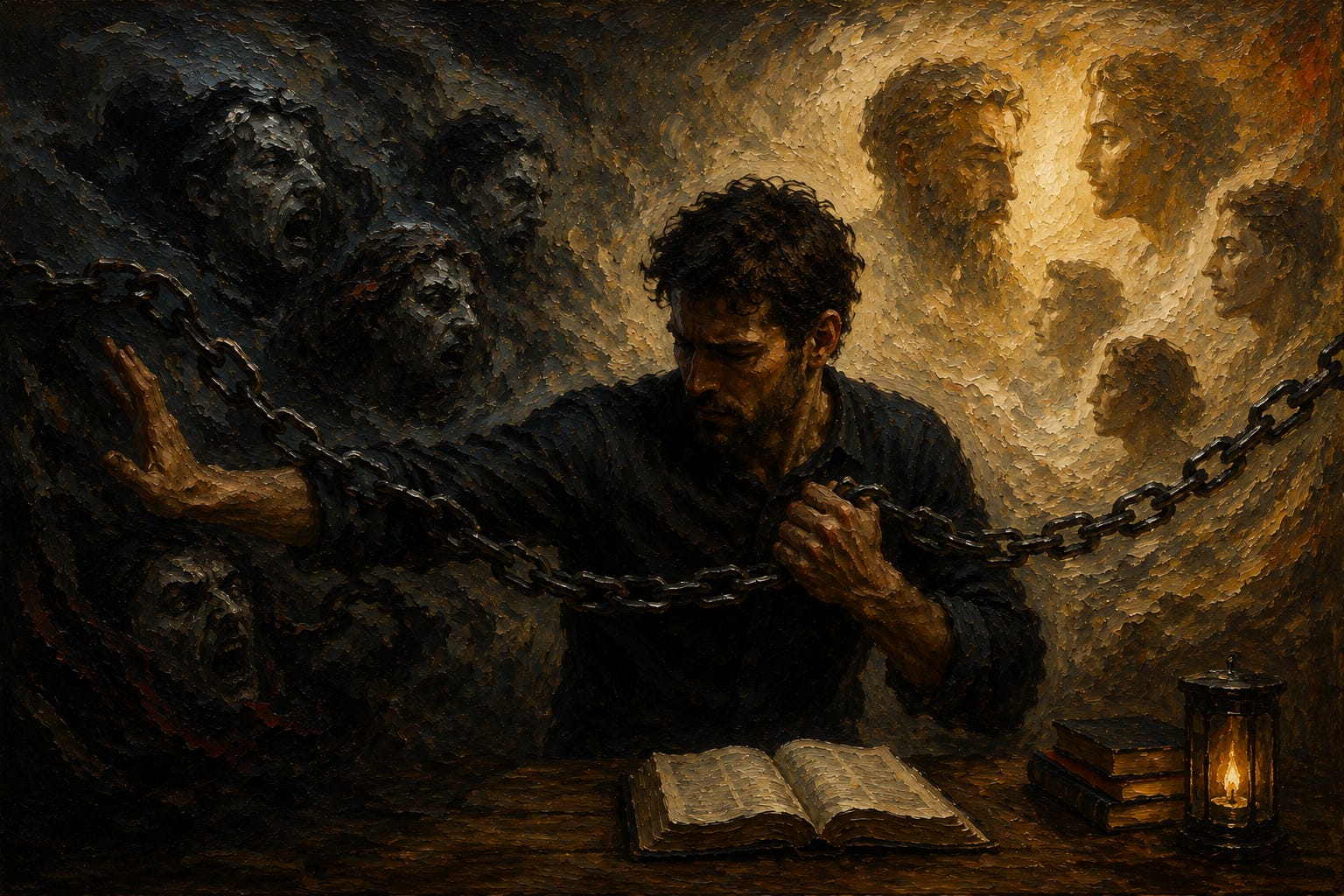
III. Taking Thoughts Captive
The problem with that mindset is that truth was never dependent upon my perfection to begin with.
We are commanded to speak truth and call out evil, not because we are flawless, but because truth itself comes from God. That responsibility and authority is given by Him, not earned through sinless performance. If mercy only belonged to spotless people, mercy would not exist at all.
This was the second time in my life I felt such a deep need for mercy.
One of the most dangerous lies people believe is that every thought entering their mind defines who they are. But thoughts are often invitations, temptations, fears, impulses, wounds, and reflections of the brokenness we carry as human beings. A passing thought is one thing. Feeding it, nurturing it, protecting it, and allowing it to rule your life is another.
That is why Scripture speaks about taking thoughts captive.
Keeping a thought captive means refusing to let every thought freely roam your mind unchecked. It means slowing down long enough to examine it before allowing it to shape your identity, actions, or worldview.
Not every thought deserves trust. Not every emotion deserves agreement. Some thoughts deserve resistance. Some deserve interrogation. Some deserve starvation.
The mind is a dangerous place when every thought is treated as truth. Some thoughts arrive to test you, not define you.
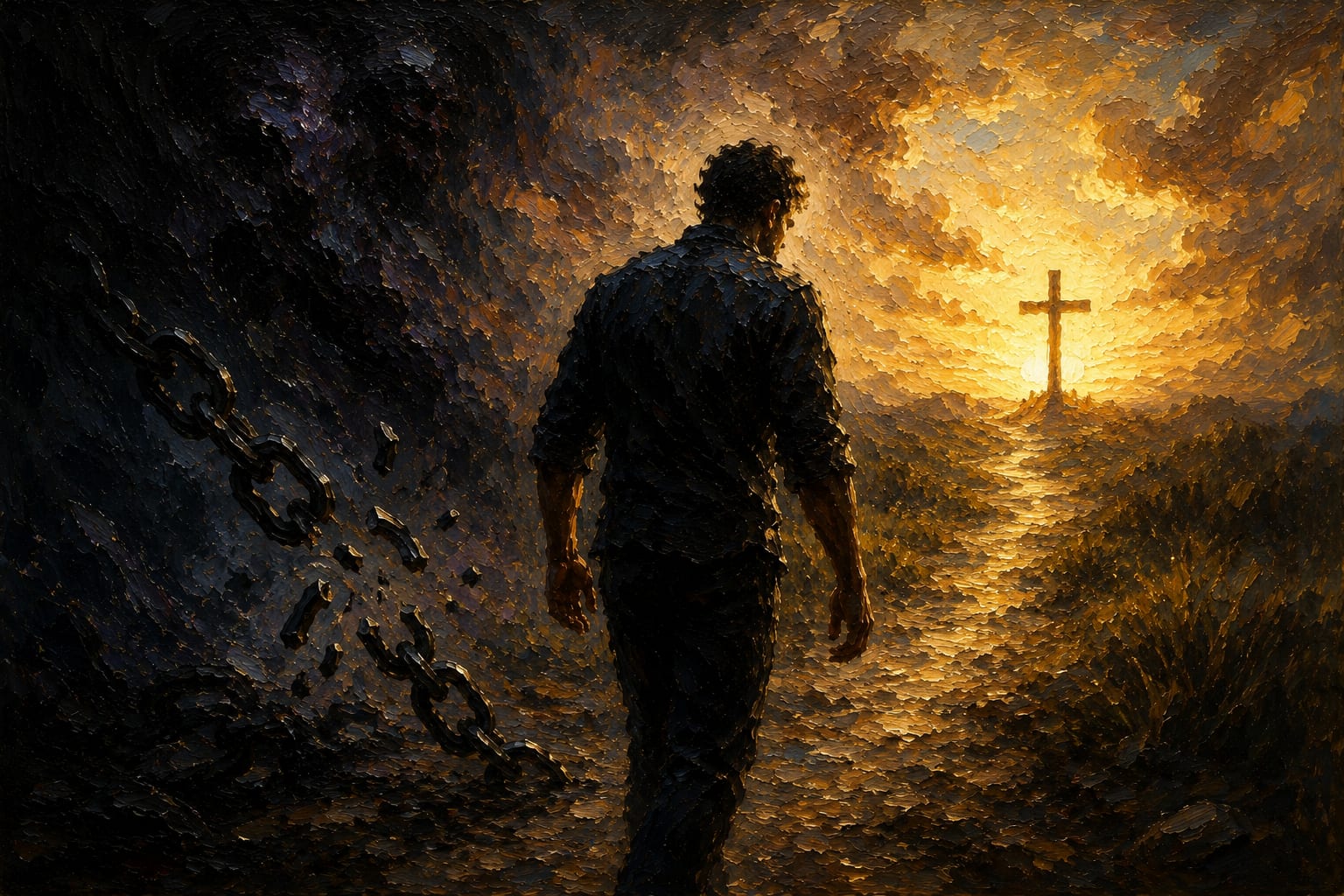
IV. Mercy Stronger Than Paralysis
Marcus Aurelius also wrote:
“The soul becomes dyed with the color of its thoughts.”
That quote used to terrify me. Now it motivates me. Because if thoughts can stain a man over time, disciplined thoughts can rebuild one too.
The reality is that there are people reading this right now who are mentally chained to one thought, one failure, one desire, one moment, or one secret they cannot escape. Physically they are alive, but mentally they are frozen in place by shame.
I understand that feeling more than I wish I did.
But hear me clearly: you are not every thought that enters your mind. You are what you repeatedly choose to entertain, nurture, and become.
Mercy is not pretending darkness never existed. Mercy is God refusing to let darkness have the final word.
The war in your mind is real.
But so is mercy.
And mercy is stronger than paralysis.