



We talk a lot about purpose, pain, and how we make sense of the world when life gets loud. But there’s one question that sits right in the crosshairs of faith, reason, and reality:
Do the miracles in the Bible go against science?
Short answer: No - they go beyond science.
Here’s why.
1. What Science Actually Is (Modern Academic Definition)
Science is the systematic, evidence-based method of studying natural phenomena - observing them, measuring them, running tests, challenging assumptions, and building explanations that can be repeated and proven wrong if necessary.
Its whole goal is to describe what normally happens in the natural world.
Meaning: Science tells us what usually happens.
It does not tell us what can’t happen.
Even Scripture makes it clear that God built a world with dependable rhythms:
“You established the fixed laws of heaven and earth.” - Jeremiah 33:25
“While the earth remains… cold and heat, summer and winter… shall not cease.” - Genesis 8:22
Science studies the normal order. God is not bound by it.
2. Miracles Don’t Violate Science - They Rise Above It
Science works within one rule:
Everything gets a natural explanation.
That’s fine as a method - but it’s not the same as saying nature is all there is.
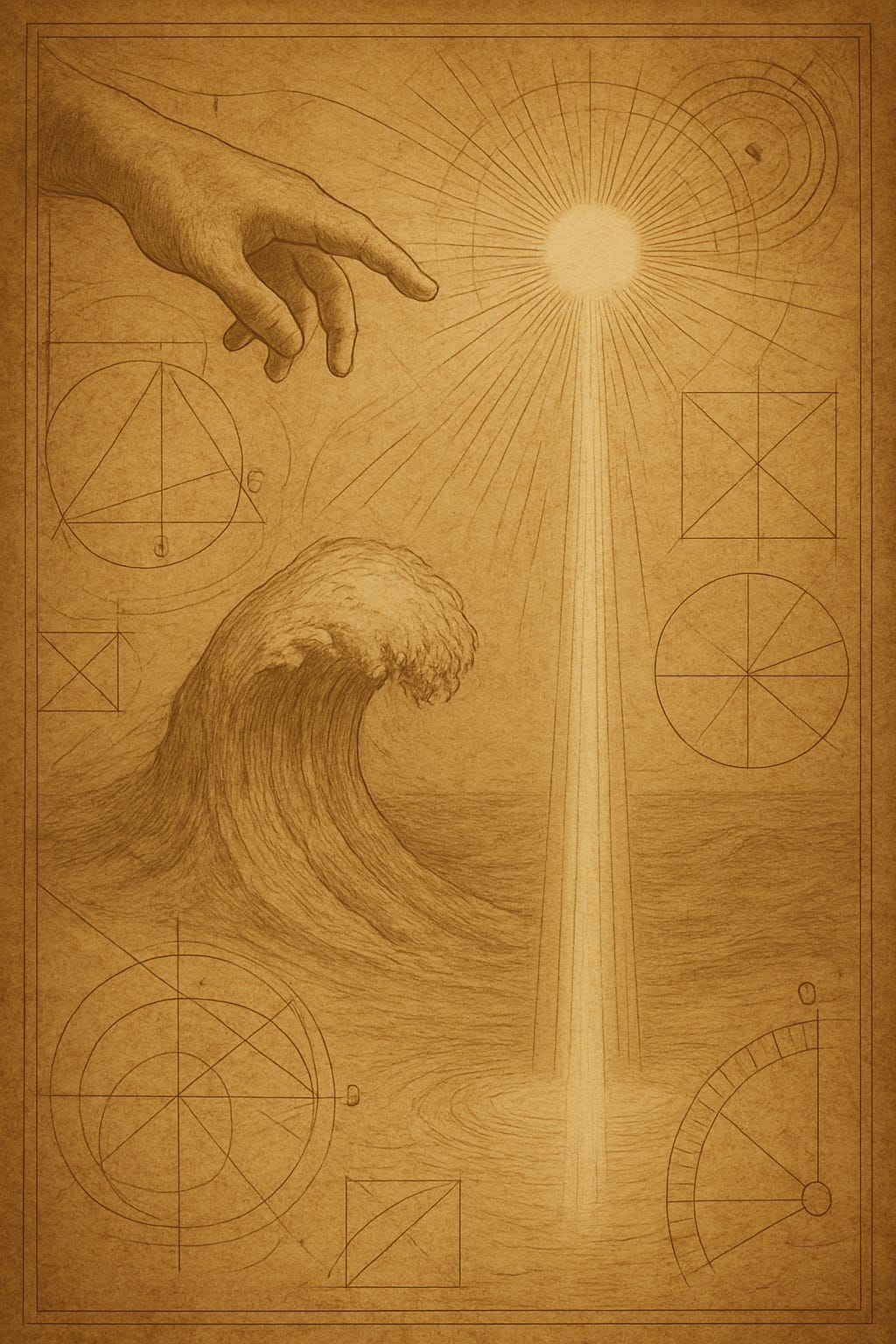
If God exists, miracles aren’t glitches in the system - they’re the Architect stepping into His own blueprint.
Water into wine doesn’t “break” chemistry (John 2:1–11).
Rising from the dead doesn’t “break” biology (Matthew 28:6).
A miracle is simply:
God doing what nature is too limited to pull off.
It’s like a guitarist bending a note.
The guitar wasn’t designed to do that on its own - but in the hands of the artist, it sings anyway.
3. Miracles Aren’t Random, and They Aren’t Cheap Tricks
Biblical miracles always come with weight behind them:
Purpose
Meaning
Context
A message you can’t ignore
Examples:
The Red Sea - deliverance under fire (Exodus 14:21–31).
Mount Carmel - God proving who’s actually in charge (1 Kings 18:36–39).
Feeding the 5,000 - Christ showing His identity, not His convenience (John 6:1–14).
Healing the blind man - God working in real time, not theory (John 9:1–7).
Miracles aren’t magic tricks.
They’re Moments of Revelation.
4. The Real Clash Isn’t With Science - It’s With Worldview
Science can honestly say:
“Water doesn’t turn into wine by itself.”
“Dead bodies don’t rise on their own.”
That’s true. That’s the normal order.
But science cannot say:
“Therefore God cannot raise the dead.”
“Therefore miracles can’t happen.”
That’s not science.
That’s someone slipping their philosophy into a lab coat.
Scripture paints a very different picture:
Creator of natural laws - Genesis 1:1
Sustainer of all things - Colossians 1:17
Still active in His creation - Psalm 77:14
Nothing is too hard for Him - Luke 1:37
If God is real, then miracles aren’t problems - they’re possibilities.
Christianity itself rests on the greatest one:
“If Christ be not raised, your faith is vain.” — 1 Corinthians 15:14
5. So Do Miracles Contradict Science?
No.
Miracles don’t play by the rules of nature because they’re not from nature.
Science explains how creation normally runs.
Miracles are the Creator stepping in personally.
To say miracles are impossible, you have to assume:
“Nature is all there is.”
That’s not science.
That’s a belief system dressed up as certainty.
In the end, miracles only look impossible when you limit reality to what you can measure.
But if God is real - if purpose is real - then miracles aren’t violations of nature.
They’re reminders. Interruptions. Wake-up calls. Moments where God steps into the story and says: “Watch.”
A miracle is not a contradiction. It’s an invitation.
wow. i didn't realize that within substack i would be getting preached to