


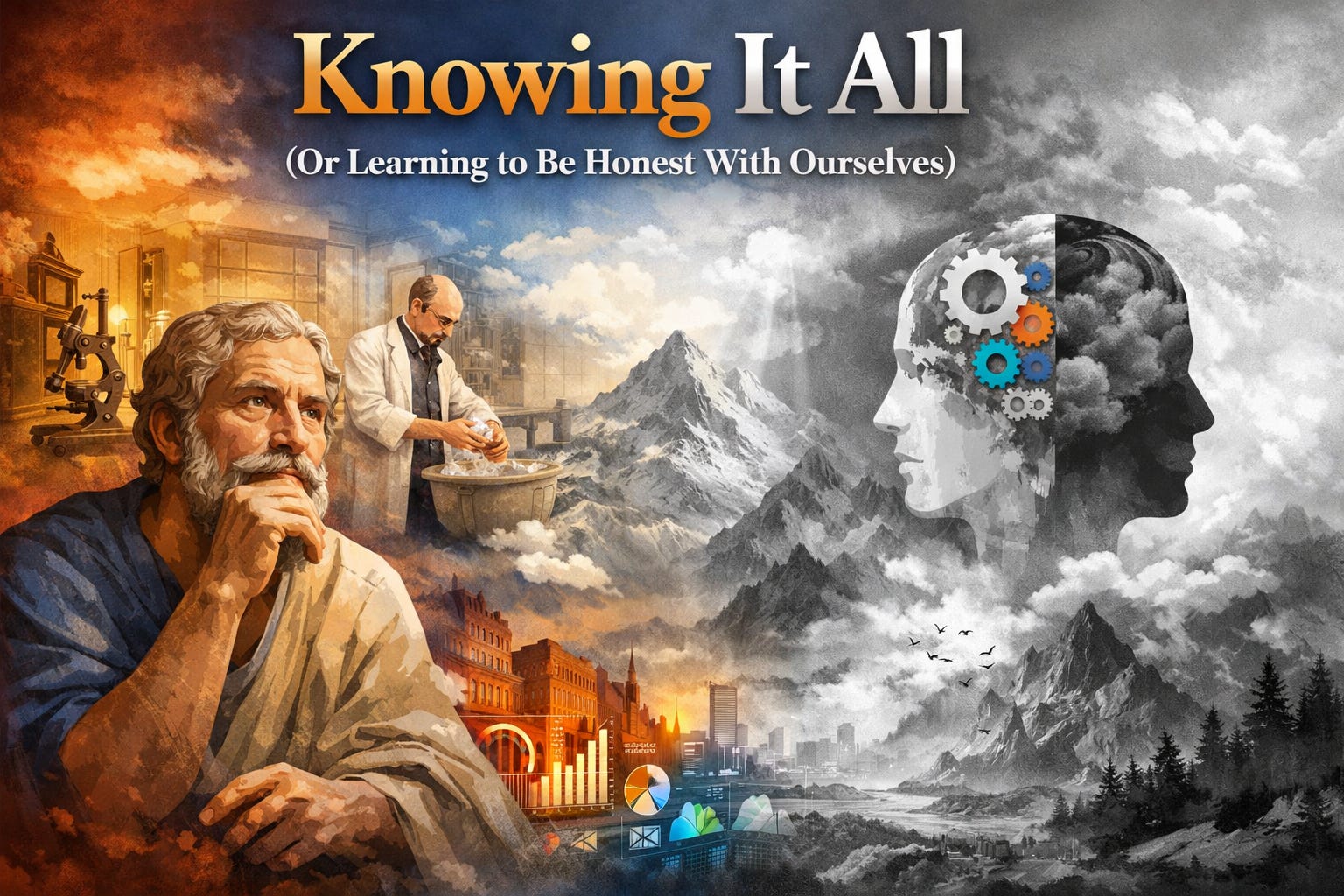
Throughout all of my relationships, there are moments where I come across that friend.
The one who has something to say about everything. Every topic. Every situation. Every conclusion already formed.
It’s not wrong to be a jack of all knowledge and it’s not wrong to be a jack of one knowledge. But what both types of people reveal is this simple reality: both can be wrong.
Truth doesn’t bend to expertise. It doesn’t submit to confidence and it certainly doesn’t care how convincing someone sounds.
The fact of the matter is, objective truth is a fundamental part of this world that cannot be changed. It exists independently of what we believe, feel, or argue.
For most of my life, I considered myself someone grounded in logic, reasoning, and data. I told myself that emotions get in the way of truth. That facts should lead and feelings should follow.
But when I looked closer, I realized something uncomfortable.
I was using emotion too.
I never wanted to accept that, because my resistance to emotion came from experiences where emotions ran wild—where feelings replaced facts and deceit followed. But rejecting emotion entirely was itself an emotional reaction. A defense mechanism shaped by past chaos.
The deeper truth is this: everyone is emotionally searching for truth. Emotion isn’t the enemy. Unchecked emotion is. When emotion runs without discipline, it distorts direction. It doesn’t just influence conclusions—it hijacks the path altogether.
Still, emotion isn’t the only method that can fail us.
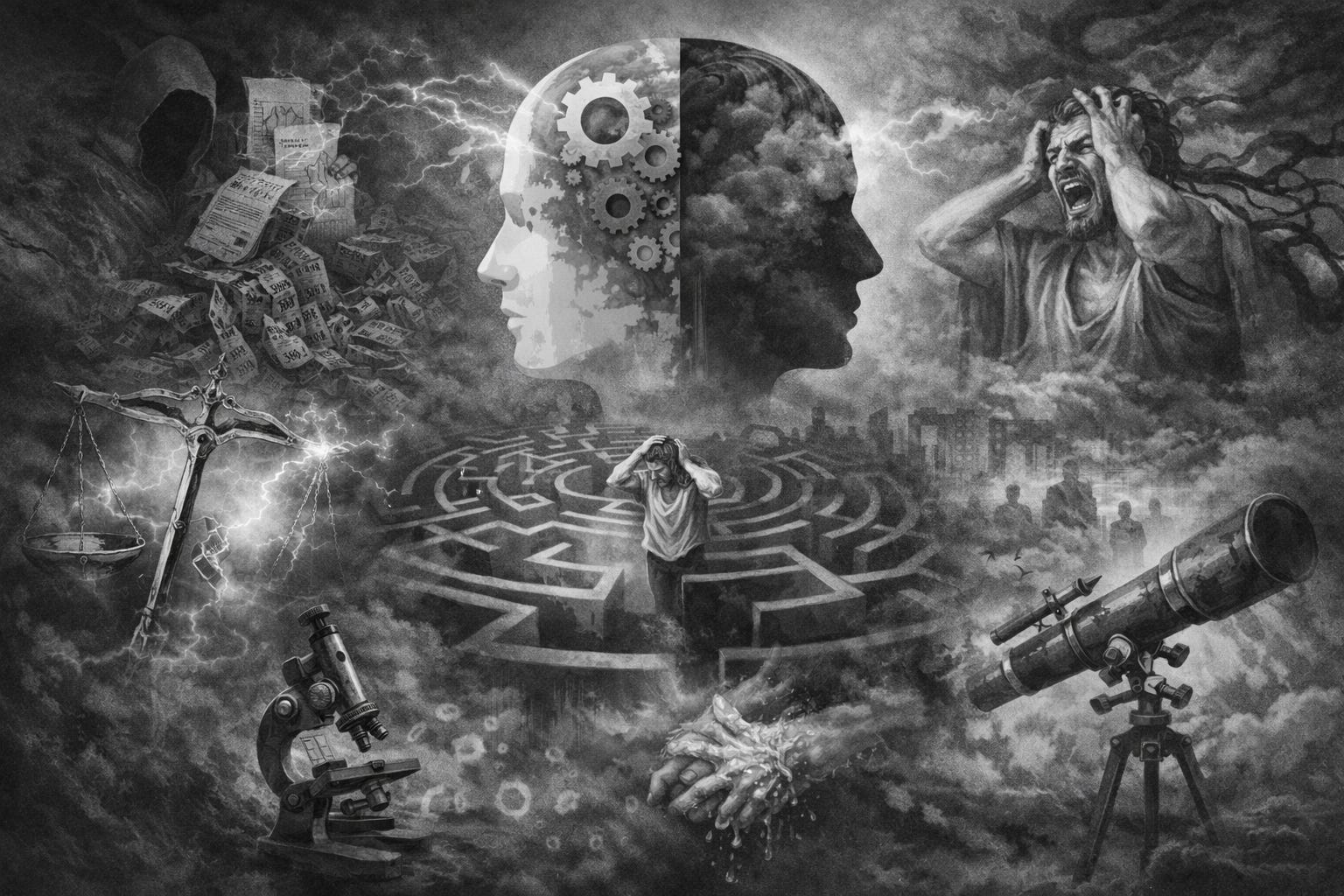
Data analysis feels safe.
Objective. Reliable. But data is only as honest as the hands that collect it. Who gathered the data? What assumptions were made? What bias was present before the first number was recorded? Emotional wildness doesn’t disappear just because statistics are involved—it often shows up earlier, upstream, long before the data reaches us.
Reasoning has similar weaknesses.
We reason constantly, but we also rush. We jump to conclusions because uncertainty makes us uncomfortable. When we reason too quickly, we miss vital information. That’s how partial truths are formed—not lies, just incomplete realities presented as wholes.
Then there’s logic.
Logic is powerful, but it’s not flawless. Logic works by accepting premises and following them to a conclusion. If the premises are wrong, incomplete, or emotionally biased, logic will still work perfectly—and lead you perfectly in the wrong direction. Logic preserves consistency, not truth. It will faithfully carry bad assumptions all the way to a confident conclusion.
That’s what makes isolated logic dangerous.
You can be logical and still be wrong.
You can be consistent and still miss reality.
You can win an argument and lose the truth entirely.
History offers sobering reminders of this.
History
In the mid-1800s, a Hungarian physician named Ignaz Semmelweis noticed something deeply unsettling. Women giving birth in hospitals staffed by doctors were dying at far higher rates than those assisted by midwives. After relentless observation, he realized doctors were performing autopsies and then delivering babies without washing their hands.
Semmelweis proposed that invisible particles were being transferred—something no one could see at the time. When handwashing was introduced, death rates dropped dramatically. Yet he was mocked and dismissed. Why? Because the truth couldn’t be observed yet. There was no microscope powerful enough to prove it.
The germs didn’t care.
They existed whether anyone believed in them or not. Lives were lost regardless of medical consensus. Authority, logic, and tradition all failed because curiosity and humility were absent.
That lesson still applies.
So many things exist today that we cannot yet see. If you believe we are living at the pinnacle of understanding, history suggests otherwise. Every generation that thought it had “arrived” was later proven incomplete.
We need to refresh our minds with curiosity.
We need to humble ourselves.
And we need to remember that much of what we organize our daily lives around is still theory—useful, necessary theory, but theory nonetheless.
Truth does not care about your opinion.
It does not care about your preferred method of reasoning.
It does not care about your confidence, credentials, or certainty.
Truth simply is.

If there is a posture worth adopting, it isn’t emotionalism or cold logic alone. It’s disciplined emotion paired with examined reasoning. Logic checked by humility. Data questioned with curiosity.
Growth doesn’t come from knowing it all.
It comes from realizing how much you’re still learning.